


 Login
Login

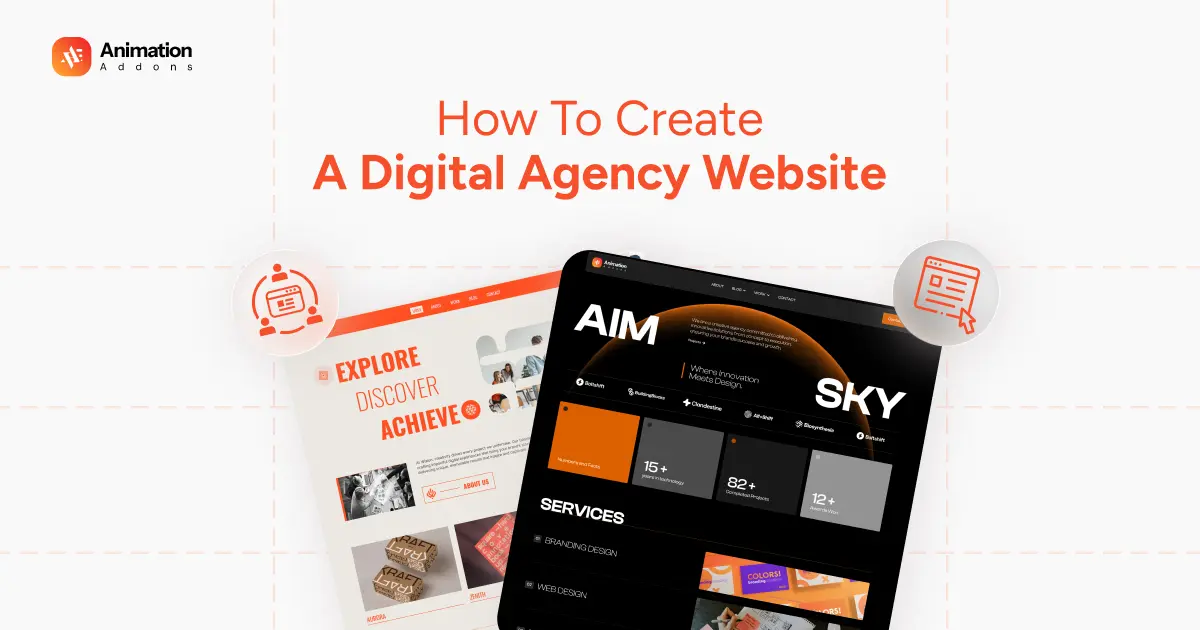
You may have seen many ways to create a digital agency website. Some methods are complicated and confusing. As a result, you might feel overwhelmed and end up learning nothing.
To solve this problem, let me introduce one of the best WordPress plugins, Animation Addons. It helps you not only build a website but also add animations easily.
In this guide, you will learn how to create a digital agency website without starting from scratch. Even someone with little technical knowledge can build a professional site by following these steps.
Start With Strategy (Before You Touch Design)
Most agency websites fail because they start with colors and layouts instead of clarity.
A beautiful website cannot fix a weak message. Before choosing a theme or adding animation, you need direction. Your website is a business tool. It must support a clear goal.
Strategy always comes first.
💡
Pro Tip:
Document your strategy in a simple one-page brief. This will save time later when making design or copy decisions.
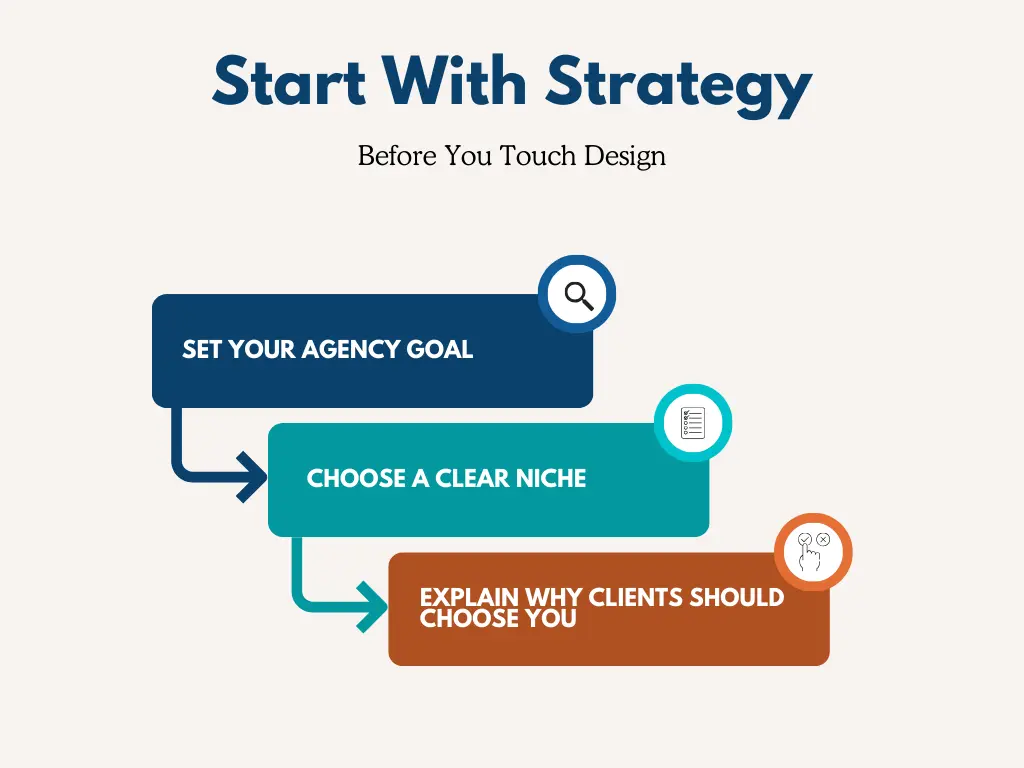
Set Your Agency Goal
Every agency website needs one main objective.
Ask yourself what you want to achieve:
- Generate leads
- Book strategy calls
- Show your portfolio
- Build authority
Pick one primary goal. That goal will shape your homepage, your content, and your call to action.
If your goal is booking calls, your homepage should focus on results and trust proof. If your goal is to showcase work, your case studies should appear early.
One main goal is to create clarity. Clarity increases conversion.
Choose a Clear Niche
General agencies struggle because their message sounds like everyone else. Instead of saying, We build websites, say, We build high-converting websites for SaaS startups.
Specific positioning builds trust. It shows you understand a certain type of client. You can specialize by industry, service, or client type. A clear focus makes your marketing easier and strengthens your pricing.
Specific wins over general.
Explain Why Clients Should Choose You
This is your value proposition. Visitors want to know what problem you solve and what result they will get.
Answer clearly. Who do you help? What result do you create? Why are you different?
A simple formula works well. We help the target audience achieve results through a unique method. Avoid vague phrases like we are passionate or we deliver excellence. Instead, speak about outcomes and results. Clear and specific messaging builds trust.
Now that you know the strategy, let’s jump into the steps to create your website.
5 Steps to Build Your Agency Website
Building an agency website is not about installing a theme and adding content randomly. It is a structured process.
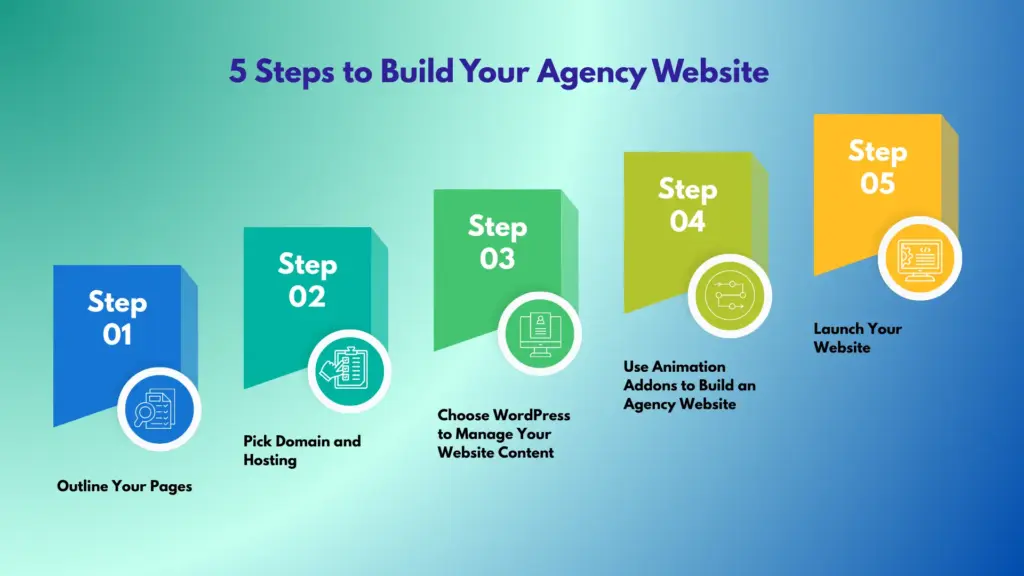
By following these five effective steps, you can save time and build a digital agency website in a matter of seconds:
Step 1: Outline Your Pages
Before thinking about design, map out your structure. At a minimum, your agency website should include Home, Services, Case Studies, About, and Contact. These pages create the foundation of trust.
The Home page introduces your positioning and main offer. Services explain what you actually deliver. Case Studies prove results. About builds credibility. Contact makes the next step simple. As your agency grows, you can add Blog, Pricing, Resources, or dedicated Lead Magnet landing pages. These help with SEO, authority, and nurturing traffic.
The key principle is simple. Structure first, design later. Only a clear page hierarchy makes everything else easier.
Step 2: Pick Domain and Hosting
Your domain name should be short, easy to spell, and brandable. Avoid complicated words and avoid hyphens. If people cannot remember your domain after hearing it once, it is too complex.
That’s why hosting matters more than most agencies realize. Your server must be fast, secure, and reliable. Make sure SSL is included, support is responsive, and daily backups are available.
Otherwise, slow websites hurt rankings and reduce conversion rates. Since speed directly impacts both SEO and user trust, invest in quality hosting from the beginning. It saves you problems later.
Step 3: Choose WordPress to Manage Your Website Content
WordPress is the most popular choice for agencies because it’s flexible, SEO-friendly, and built to scale long-term. It’s a great fit for service-based businesses that plan to grow.
That’s where Animation Addons comes in. It’s a GSAP-powered WordPress animation plugin that includes 2000+ pre-built websites and 10,000+ sections, so you can build a high-quality agency site faster (without starting from scratch).
Many agencies rely on ready-made layouts because of the benefits of using templates to design a website.
Step 4: Use Animation Addons to Build an Agency Website
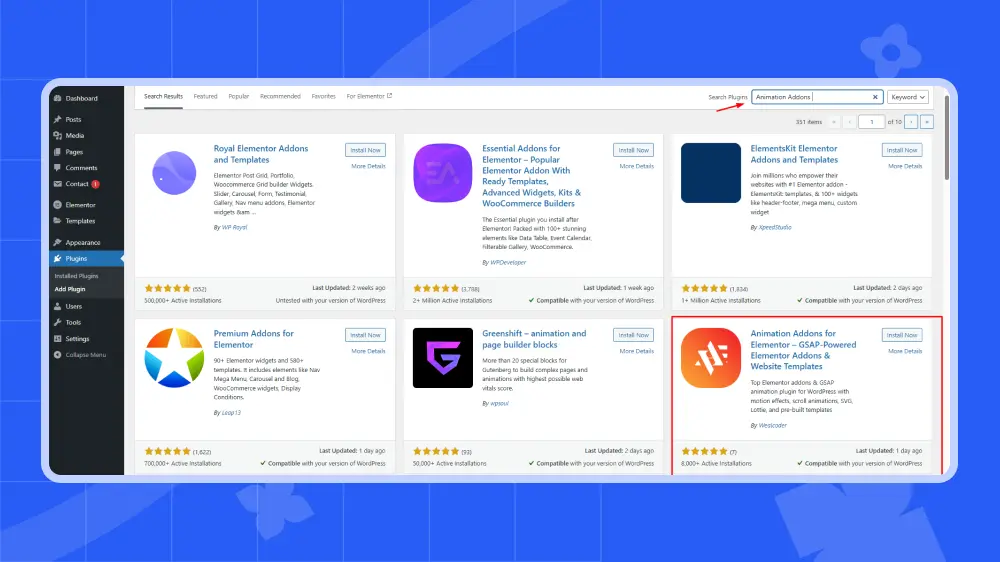
(i) First things first, make sure Animation Addons is installed and activated on your website.
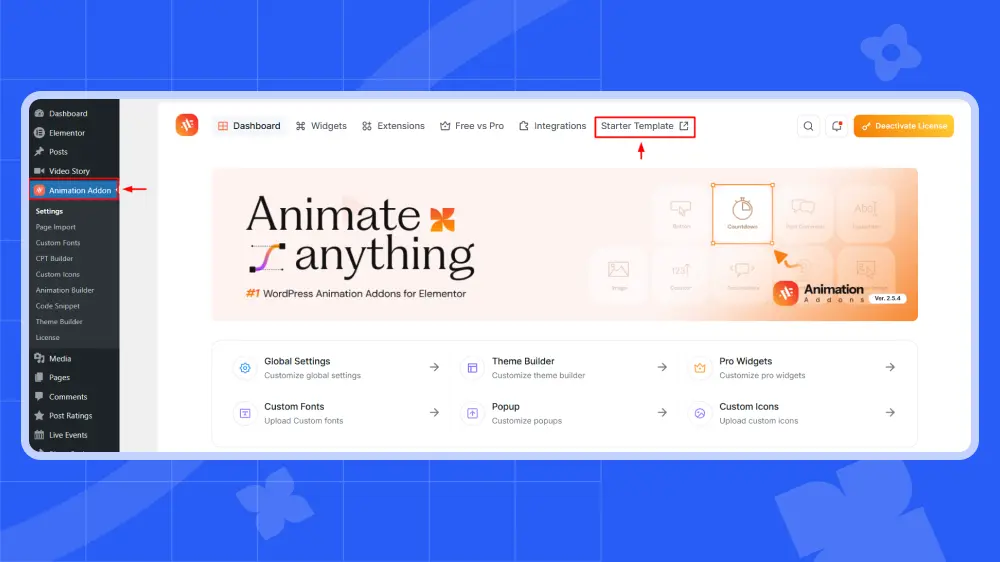
(ii) After that, go to Animation Addons and click on “Starter Templates.”
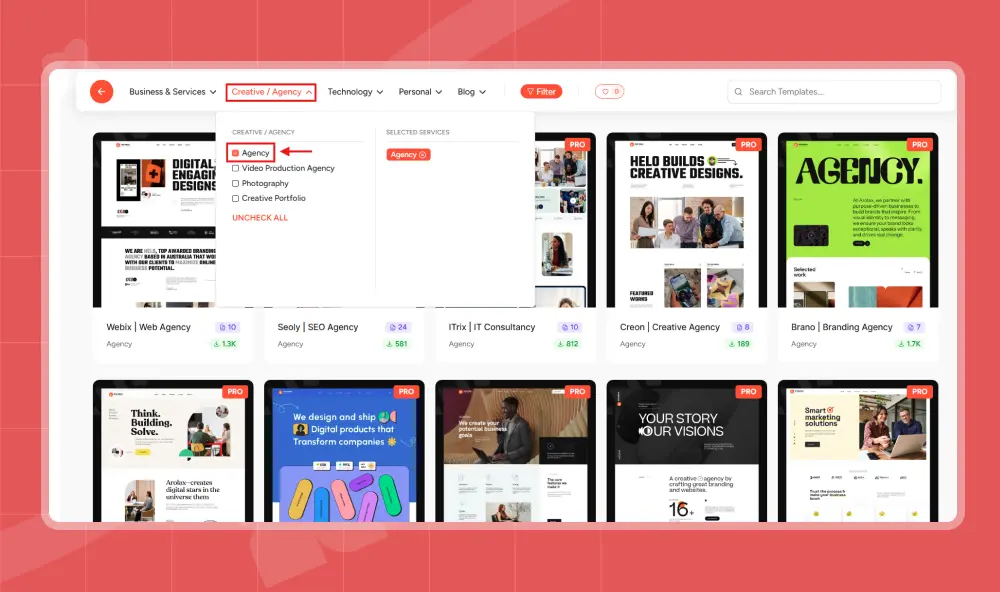
(iii) Once you click on Starter Templates, you will see different niche templates to explore.
Simply go to the Creative/Agency section and select Agency to filter and view only agency templates.
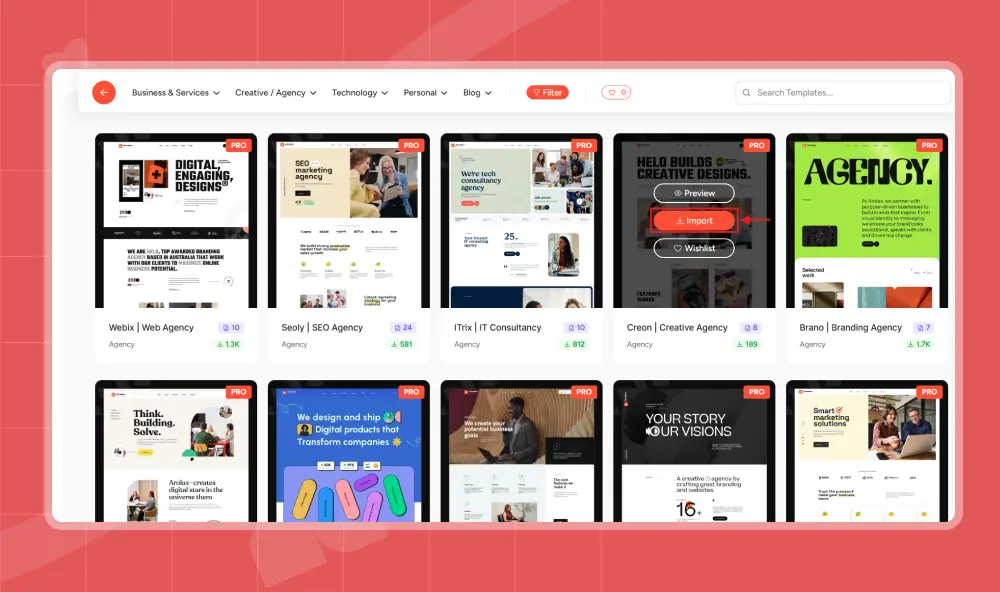
(iv) Next, choose any template and hover your mouse over it. You will see three options: Preview, Import, and Wishlist.
All you have to do is click on Import.
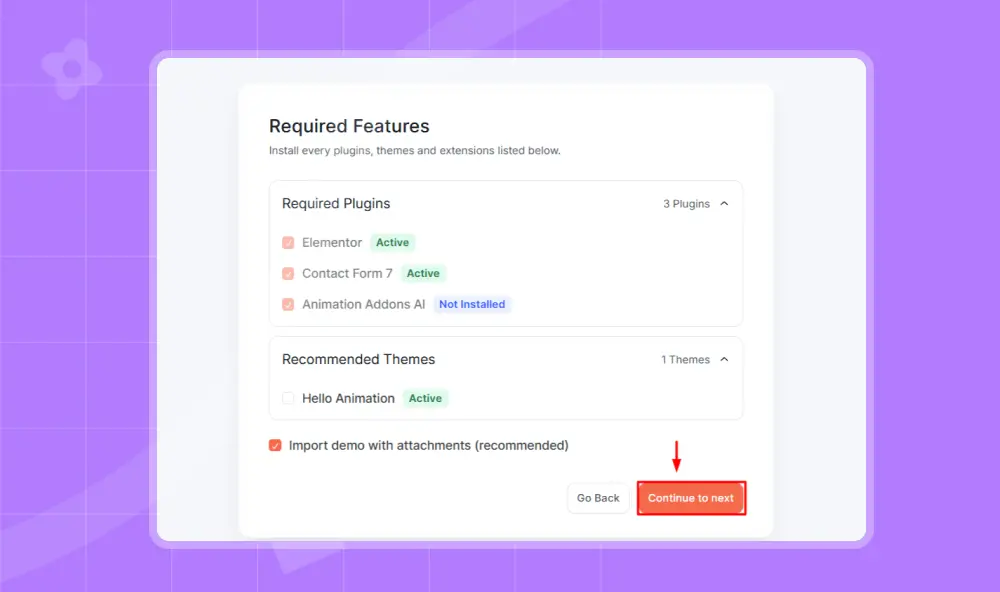
(V) Now, click on ‘Continue to Next’ to procced.
Step 5: Launch Your Site
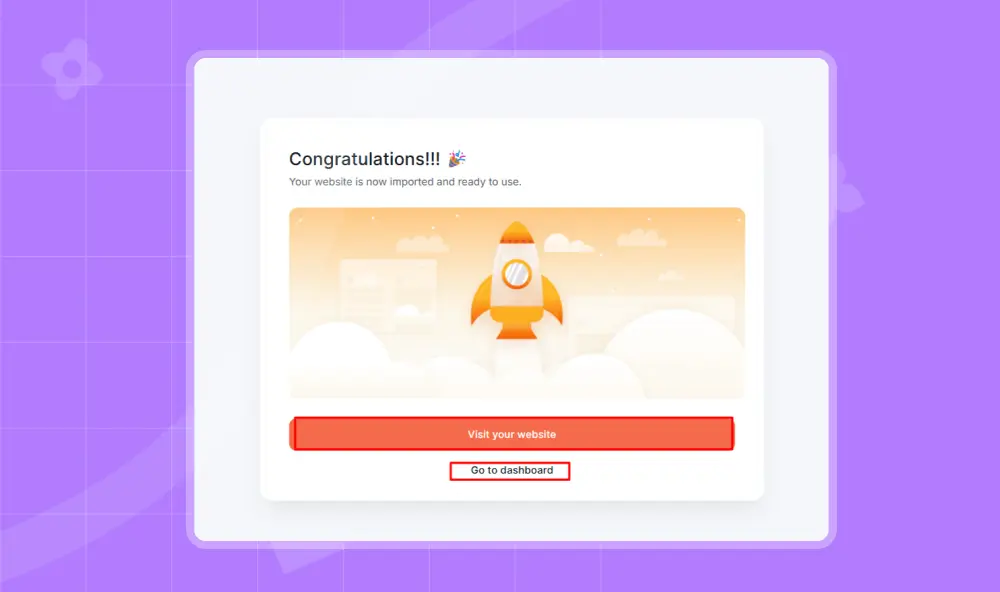
Once you click “Continue to Next,” your digital agency website will be created successfully. Click “Visit Website” to preview it, or go to the dashboard to keep everything as it is. Since you want to customize your website, click “Visit Website.”
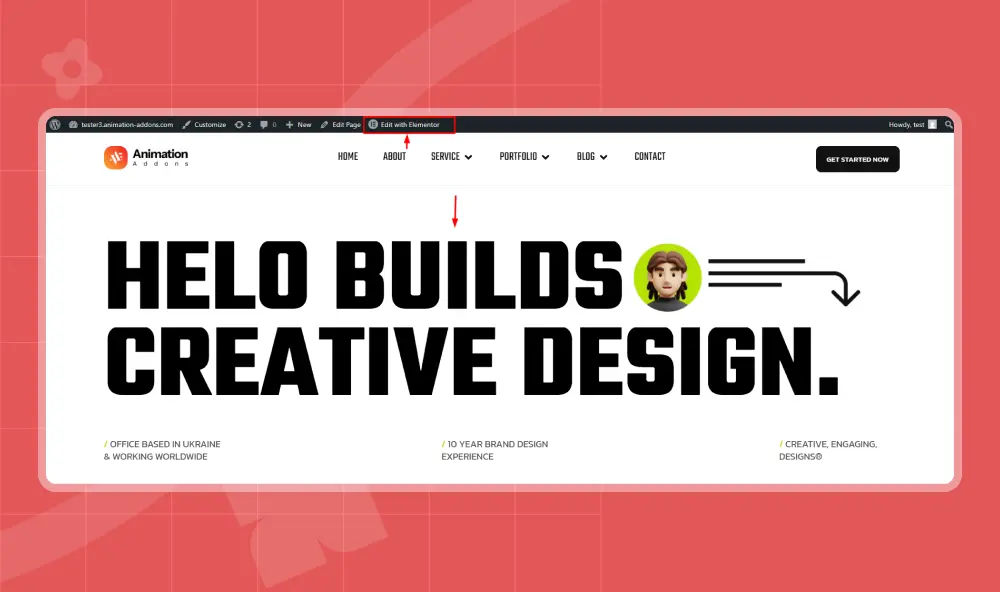
After that, select the page you want to customize and click “Edit with Elementor.” From there, you can personalize everything according to your needs.
Common Mistakes to Avoid
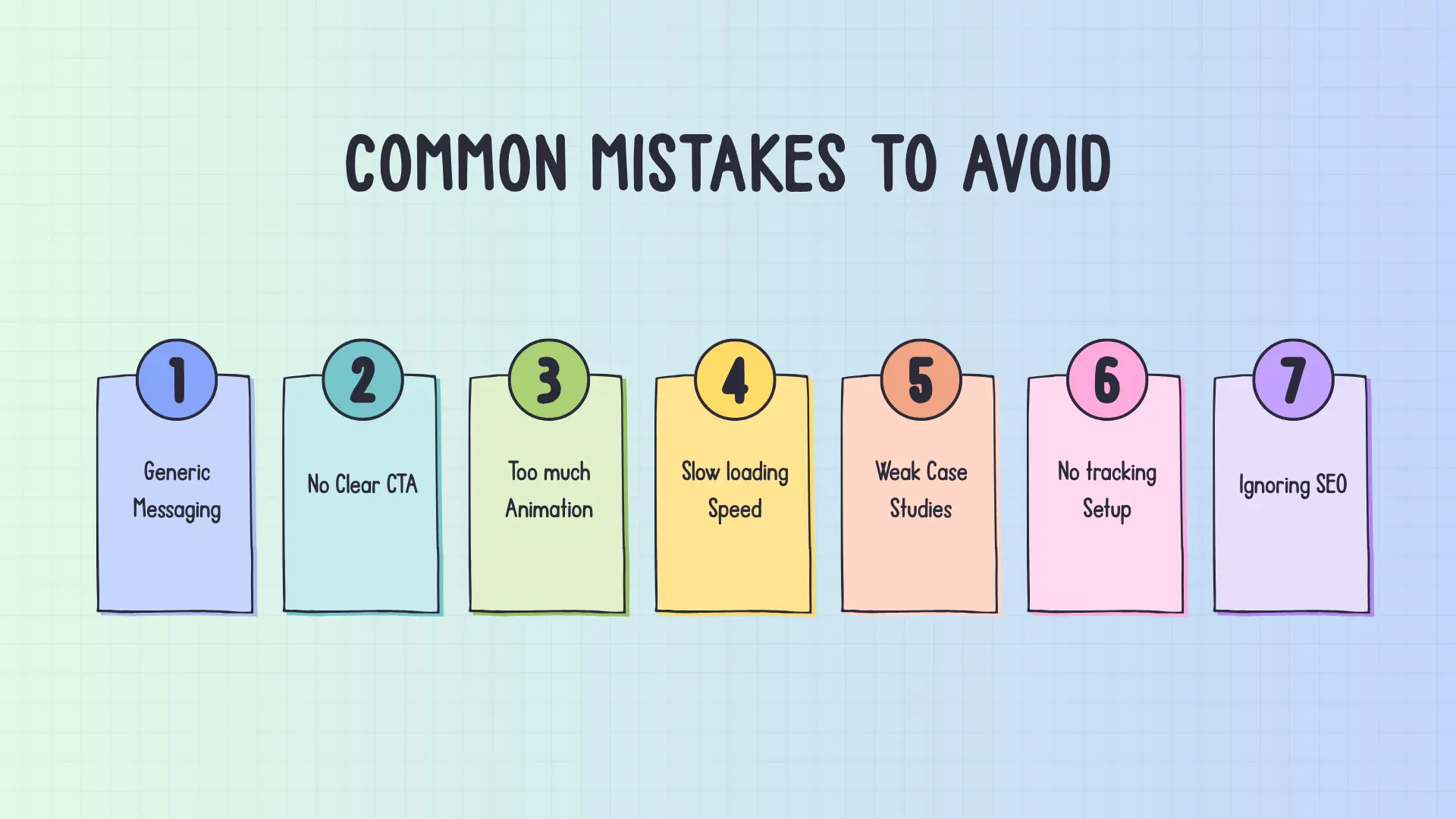
Many websites don’t do well because of simple mistakes. Using unclear words, having no clear buttons to click, slow pages, or ignoring search engines can make visitors leave.
Fixing these common problems helps your website work better and grow your business:
Generic Messaging
Avoid generic messaging when promoting your brand voice on the website. Many agencies rely on broad, unclear statements without clearly explaining the specific value they provide, who they serve, or how their services make a real difference.
Therefore, do not make vague promises. Clearly say who you help, what service you offer, and what real results clients can expect. At the end of the day, clear and focused messaging builds credibility and makes decision-making easier for potential clients.
No Clear CTA
A visually impressive website without a clear call-to-action will not generate results. Many businesses either hide their CTA, use weak phrases like “Learn More,” or overwhelm visitors with too many competing actions. Without a strong direction, users simply leave without taking the next step.
Therefore, every page should guide visitors toward one primary goal, whether it is booking a consultation, requesting a quote, starting a trial, or making a purchase.
The CTA should be visible, direct, and action-oriented. Strong calls-to-action create clarity. Clarity increases conversions.
Too Much Animation
Animation can increase engagement and user experience when used strategically. Otherwise, using too much animation can distract visitors and enhance the bounce rate.
For instance, if every section moves, fades, or slides into view, the website can feel overwhelming for visitors rather than impressive. Plus, heavy animation can slow down interaction and badly impact on performance.
If you want to understand the real cost of animation websites, check our cost of animation websites guide.
Slow Loading Speed
Website speed directly affects user experience, search rankings, and conversion rates.
Even small delays can increase bounce rates and reduce trust. Slow loading is often caused by large uncompressed images, excessive scripts, poor hosting, or unnecessary plugins.
A fast website feels professional and reliable. Optimizing performance should always be a priority. Visitors are more likely to stay longer and take action, when they can navigate quickly and interact without delays.
Weak Case Studies
Many agencies showcase projects without explaining the actual impact of their work. Simply displaying screenshots or listing past clients is not enough. Without context, visitors cannot understand the real value delivered.
Strong case studies clearly explain the client’s initial challenge, the strategy implemented, and the measurable results achieved. They demonstrate transformation and provide proof of expertise. Case studies that highlight outcomes rather than just visuals build trust and strengthen credibility.
If you want to see how real agencies are achieving measurable growth, explore how agencies are driving higher revenue with Animation Addon
No Tracking Setup
Without proper tracking, it is impossible to measure performance or improve results. Many businesses launch their websites without installing analytics tools or setting up conversion tracking.
As a result, they rely on assumptions rather than data. Tracking allows you to understand user behavior, monitor conversions, and identify areas for improvement.
Data makes decisions strategic instead of guesswork. A website should not only look good, but also provide measurable insights.
Ignoring SEO
A well-designed website that cannot be found in search engines will struggle to generate consistent traffic. Ignoring search engine optimization limits long-term growth and visibility.
Poor structure, missing meta information, weak content, and a lack of keyword strategy are common issues. SEO should be considered from the beginning of the project, not as an afterthought. A strong foundation ensures that your website not only attracts visitors but also reaches the right audience.
Visibility leads to traffic, and traffic creates opportunities for growth.
Final Thoughts
Creating a digital agency website is more than picking a theme or adding animations. The key is strategy, clarity, and structure. Start by defining your main goal and target audience, plan your pages, and write copy that addresses your clients’ needs.
Design your site to guide visitors toward action, optimize for mobile, and track performance to improve results.
A well-planned website builds trust, strengthens your brand, and generates leads. Focus on clarity, structure, and proof of results, and your site will not only impress visitors but also grow your business over time.
Remember, your website is a living tool that gets better as you learn what works for your audience.
FAQs
How many pages should my agency website have?
At minimum, include Home, Services, Case Studies, About, and Contact. Optional pages like Blog, Pricing, Resources, or Lead Magnets can be added as your agency grows.
Should I start with design or strategy?
Always start with strategy. Define your goals, niche, and value proposition first. Design comes later to support your clear messaging.
How important is copywriting for conversions?
Very important. Strong, clear, outcome-focused copy builds trust and drives action. Design attracts attention, but copy convinces clients to take the next step.
Can animation help my agency’s website?
Yes, when used strategically. Animation can guide attention, highlight CTAs, and improve engagement. Avoid overdoing it to prevent distractions and slow load times.

Leave a Reply